


Chatannier
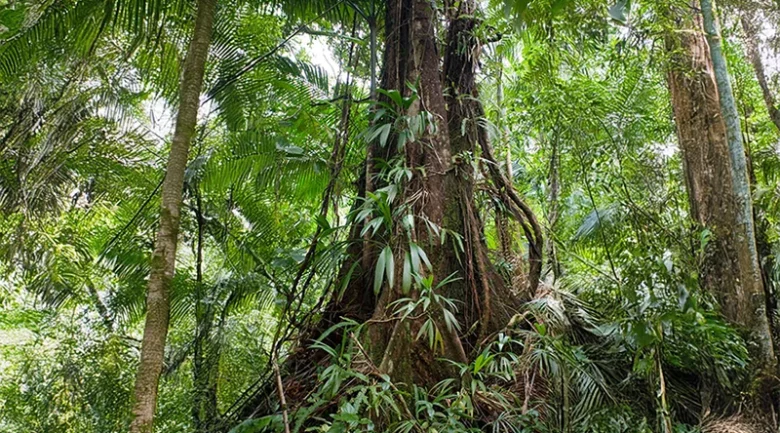
The Chatannier (or Chatannyé in Kwéyòl) is a monumental canopy tree of the genus Sloanea that serves as a cornerstone of the primary rainforests of Dominica. Recognised as one of the most structurally impressive species in the Lesser Antilles, the Chatannier is defined by its massive, plank-like buttress roots that flare out from the base of the trunk. These trees are a common sight for those engaging in hiking in Dominica, especially along the interior trails leading to Middleham Falls or traversing the Syndicate Nature Preserve and the area surrounding the Emerald Pool.
Structural Ecology and Soil Stabilization
With its wide, stabilising roots, this impressive tree helps anchor the forest soil, playing a crucial role in the island’s ecosystem. Because Dominica features steep volcanic topography and high annual rainfall, these buttresses act as natural retaining walls that mitigate land degradation and erosion. The Chatannyé is often found alongside the Gommier tree in the island’s lush, protected areas, contributing to the nation’s rich biodiversity. Mature specimens provide essential nesting cavities for endemic bird species, including the Sisserou Parrot (Amazona imperialis) and Jaco Parrot (Amazona arausiaca).
Botanical Taxonomy and Varieties
In the botanical context of Dominica, the term Chatannier collectively identifies three primary species in the Elaeocarpaceae family found locally:
- Chatannier Noir (Sloanea massonii): Identified by its darker bark and prevalence in high-rainfall zones.
- Chatannier Grand-feuille (Sloanea dentata): Known for its massive, toothed leaves and immense stature.
- Chatannier Petites-feuilles (Sloanea berteriana): Valued for its extremely dense, durable hardwood.
Historically, this timber was a primary resource for heavy construction and mill rollers. Today, these trees are managed as protected botanical assets by the Forestry, Wildlife & Parks Division, ensuring the long-term health of Dominica’s primary watersheds.


