
Oliver James Seraphin
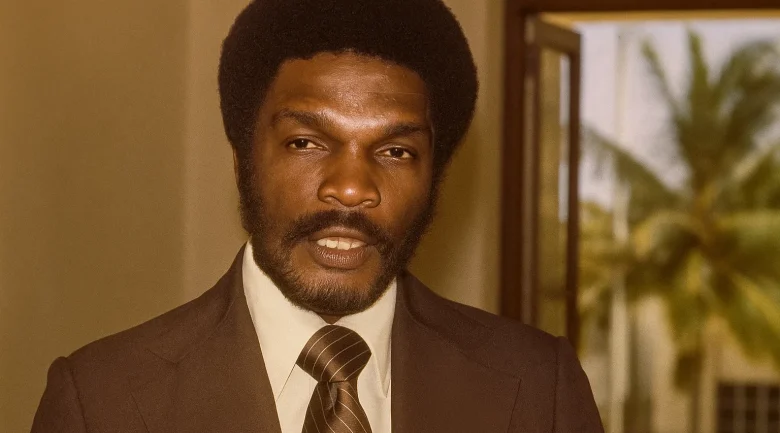
Oliver James Seraphin, often known simply as “O.J. Seraphin,” was born on 2 August 1943 in Roseau, Dominica, into a household where civic engagement and service were central values. His parents, Perry and Theotil Seraphin, were among the small but active group of Dominican families involved in community leadership in the Goodwill–Fond Cole area. Their participation in trade union discussions and local advocacy exposed him early to the principles of self-determination, discipline, and national pride that would later shape his political philosophy.
Oliver James Seraphin’s Education and Pre-Political Career
Seraphin attended Roseau Mixed School and later the Dominica Grammar School, where he was known for his leadership qualities and his interest in public speaking and debate. Eager to broaden his education, he pursued studies abroad at the Carnegie Institute in the United States and undertook professional development training in Cuba, focusing on public administration, economics, and communications. These experiences introduced him to comparative political systems and regional development models, providing him with a balanced understanding of both Western and Caribbean approaches to governance.
Before venturing into politics, Seraphin built a professional foundation in the insurance industry, where he worked as a manager and consultant. This early career not only honed his organisational and financial skills but also connected him to a wide cross-section of Dominicans, from public sector workers to small business owners, giving him insight into the aspirations and challenges of everyday citizens. His reputation as a reliable and articulate professional made him an appealing candidate for public office in the politically charged 1970s.
Political Career and Ministerial Service
Oliver Seraphin’s political life began under the banner of the Dominica Labour Party (DLP), the ruling party of the day, led by Patrick John. In the 1975 general election, he was elected Member of Parliament for the Roseau North Constituency, marking his entry into national politics. His campaign message, centred on infrastructure development and education-driven empowerment, resonated strongly with younger voters seeking modernisation after a decade of colonial-era administrative norms.
Soon after his election, he was appointed Minister for Communications, Works and Housing. In this role, Seraphin pushed for improvements in Dominica’s physical connectivity, prioritising road rehabilitation and public housing projects in rural communities such as St. Joseph, Mahaut, and Castle Bruce. He sought to expand access to safe housing loans and encouraged local contractors to participate in government projects, aiming to build national capacity rather than rely exclusively on foreign engineers.
Following a cabinet reshuffle, Seraphin became Minister for Agriculture, Lands, Fisheries and CARICOM Affairs, a shift that placed him at the centre of Dominica’s export-driven economy. He advocated diversification away from single-crop dependence on bananas and promoted greater integration of Dominican farmers into regional trade frameworks through the CARICOM agricultural councils. His ministry advanced small-farm irrigation initiatives, rural credit cooperatives, and pilot livestock programmes, early attempts at balancing environmental sustainability with economic growth.
During his years as a minister, Seraphin was also a strong proponent of public administration reform, supporting the early calls for a Public Service Commission with clearer guidelines for promotion and accountability. His speeches in the House of Assembly reflected a disciplined, pragmatic tone. He often emphasised that political progress had to be matched by competent management and citizen participation.
Prime Ministership and Leadership during Crisis
Seraphin’s rise to the highest political office came amid turbulence. In June 1979, following months of public demonstrations, strikes, and mass protests in the aftermath of the May 29th 1979 Uprising against the Patrick John government, Dominica entered a period of constitutional crisis. The Committee for National Salvation (CNS), an alliance of civic, church, and opposition representatives, brokered a compromise that led to Seraphin’s appointment as Prime Minister on 25 June 1979.
Just weeks into his premiership, Hurricane David struck on 29 August 1979, devastating nearly 80 per cent of Dominica’s housing stock, destroying much of the banana crop, and crippling electricity and communication networks. Seraphin faced the monumental task of rebuilding a country still reeling from political upheaval. His government’s immediate response focused on emergency coordination, relief distribution, and securing international assistance.
He personally led negotiations with Venezuela, Canada, the United States, France, and the United Kingdom, obtaining both financial and material support. French aid focused on rebuilding schools and hospitals, while Venezuelan technical missions assisted in restoring the electricity grid. Under Seraphin’s supervision, Dominica established a Reconstruction and Rehabilitation Committee that prioritised temporary housing, infrastructure repair, and agricultural recovery.
In addition to reconstruction, Seraphin took steps to stabilise government institutions. He reopened Parliament to ensure legislative continuity, reinstated civil-service operations, and sought to reassure investors and regional partners that Dominica’s democratic institutions remained intact. His government also re-engaged the Caribbean Development Bank (CDB) for infrastructure funding and began discussions with the International Monetary Fund (IMF) to manage emergency balance-of-payments issues.
Though his tenure lasted only until 21 July 1980, when the Dominica Freedom Party (DFP) under Mary Eugenia Charles won the 1980 general election, his short administration is credited with steering the island through the most difficult period since independence. His calm demeanour and insistence on consensus made him a transitional leader whose actions helped prevent administrative collapse at a moment when the nation could have fractured entirely.
Later Career, Business Endeavours, and Public Contributions
After leaving office, Oliver Seraphin shifted his focus from politics to entrepreneurship and national service. He entered the tourism industry and hospitality sector, developing one of the first locally owned boutique hotels near Indian River and contributing to Dominica’s early efforts to diversify its economy through sustainable tourism. His ventures were designed not only as private businesses but also as models for Dominican ownership in an industry dominated by foreign investment.
In the 1990s and early 2000s, Seraphin became an occasional commentator on national issues, advocating responsible governance and non-partisan dialogue. He emphasised the importance of youth mentorship and civic education, urging new generations to value integrity in public service. He also served as a consultant for small enterprises and community projects focused on training and entrepreneurship, reflecting his lifelong belief that economic independence begins with individual empowerment.
Seraphin remained an influential figure in Dominica’s post-independence narrative. His pragmatic management during the 1979 hurricane recovery positioned him as one of the few Caribbean leaders whose premiership was entirely defined by crisis response and reconstruction. Despite the brevity of his time in office, the administrative systems he helped stabilise, particularly within public works and agriculture, continued to influence later development policies.
In later years, he continued to participate in civic activities and contributed to discussions on public administration reform. During the 44th Independence Anniversary celebrations, he reflected on the nation’s progress since his tenure, calling for renewed investment in agriculture, better disaster preparedness, and a governance model that balanced innovation with accountability.
Even in retirement, Seraphin’s commitment to nation-building remained visible through mentorship, business development, and cultural initiatives in Roseau. His career bridged the transition from colonial civil service to modern governance, from agricultural dependence to diversified enterprise, and from political turbulence to institutional maturity.


